What Is AI Marketing Automation? An Infrastructure Take
Summary
AI marketing automation is a layer that reads user behavioral signals and fires lifecycle email flows without human scheduling. In 2026, the AI component means the system updates its send decisions based on observed outcomes rather than static rules. This covers the infrastructure architecture: trigger patterns, LLM-assisted variant selection, send-time optimization, and the observability requirements engineering teams need before running it in production.

Teams searching for what is AI marketing automation typically land on campaign scheduling software and segmentation dashboards. That framing is useful for campaign teams but misses the operational question for engineers: what does the AI layer actually replace in your existing lifecycle infrastructure, and what does it require from your stack?
AI marketing automation, at the infrastructure level, is software that reads behavioral signals from users, determines what to send and when, and fires outbound email flows without manual scheduling. The AI component means the system updates its decisions based on observed outcomes -- not static rules written once and deployed forever.
Rule-Based Lifecycle Flows Already Do Part of This
Rule-based lifecycle automation runs on if-then logic. If a user completes signup and has not activated within 48 hours, send the onboarding follow-up. If a paying user has not logged in for 21 days, queue the re-engagement sequence.
This logic is deterministic and fully auditable. Every send traces back to its trigger condition. At small scale, the engineering overhead is manageable.
The problem arrives with signal complexity. A product with 30 behavioral signals and 10 lifecycle stages generates hundreds of potential trigger combinations. The rule tree grows to a point where no single engineer holds a full mental model of the state space. Adding a new Segment event requires auditing every rule that might be affected. What starts as a 20-rule flow becomes a 200-rule system that nobody wants to touch.
83% of email practitioners are already using behavioral triggers to some extent, per 2026 industry benchmarks. The bottleneck is not intent; it is the operational cost of maintaining hand-authored rule logic at scale.
How AI Replaces the Manual Decision Layer
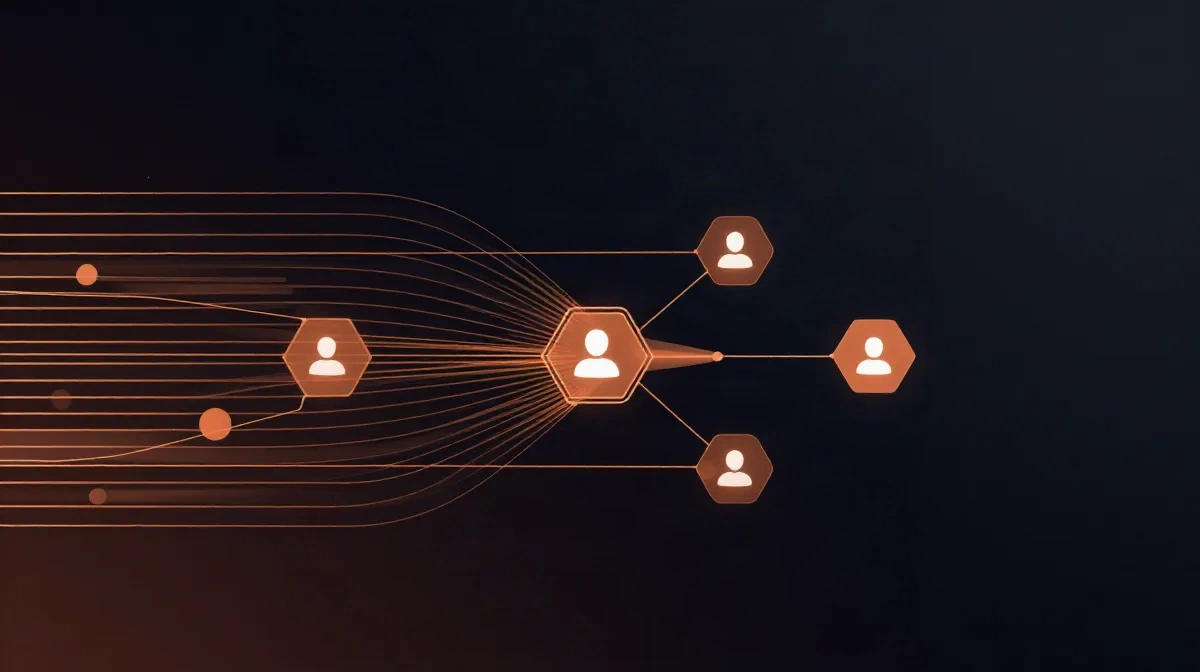
AI-based lifecycle flows replace the if-then tree with a probability model. Instead of hard-coding "send re-engagement after 14 days of inactivity," the model learns that users with a specific ICP-fit score and last-touch via the pricing page respond at day 9. Users who churned during onboarding respond better at day 21.
The model updates on every observed open, click, bounce, and unsubscribe event. The loop is: observe signal, update model, adjust send parameters, observe outcome. It runs continuously, not on a quarterly rules-review cycle.
Two architectural patterns handle this in production.
Trigger enrichment. Your existing webhook or Segment event fires the flow as before. An AI layer sits on top and adjusts the send-time window, subject line variant, and content block selection before the SMTP call goes out. This is the easier retrofit onto existing Customer.io or Klaviyo flows. Migration risk is low because the trigger logic stays unchanged.
Propensity-scored queueing. Instead of a fixed trigger event, the system scores each user on conversion propensity at every ingested event or on a rolling hourly schedule. When a user crosses a threshold, the send is queued. No manual trigger design required. This pattern produces substantially lower trigger latency but requires more infrastructure to operate and debug.
The performance gap between event-triggered sends and scheduled batch campaigns is measurable. Behavioral trigger emails generate approximately $2.87 in revenue per send versus $0.18 for scheduled broadcasts. That gap is not primarily a function of the LLM content layer; it is a function of timing precision: the trigger fires at the moment of intent, not on a Monday morning calendar slot.
The LLM Content Layer: What It Owns and What It Does Not
The LLM layer in AI lifecycle tooling handles one specific job: generating content variants at send time. It ingests the user's behavioral context -- last action taken, ICP fit score, account tenure, plan tier -- and produces a personalized subject line, preview text, and body blocks calibrated to that context.
What the LLM does not control: send scheduling, trigger conditions, domain reputation management, bounce classification, or unsubscribe compliance. Those remain infrastructure concerns. A team that treats the LLM layer as a replacement for email infrastructure thinking will discover the gap when deliverability drops.
A standard implementation generates 5 to 20 content variants per cohort segment, uses Bayesian multi-armed bandit logic to allocate sends toward the statistically leading variant, and feeds outcome data back to the model after 48 to 72 hours. The feedback loop is tight enough that variant quality improves measurably within the same campaign week -- a campaign started Monday has meaningfully better variant selection by Thursday, given sufficient send volume.
According to HubSpot's 2026 State of Marketing data, 93.2% of practitioners report that personalized experiences generate more qualified pipeline. The constraint is not belief in personalization -- it is the infrastructure cost of delivering it at genuine per-user granularity rather than by segment bucket.
Which Behavioral Signals Actually Move the Model
Not all signals carry equal predictive weight. In practice, the signals with the highest predictive value for lifecycle email models fall into three categories.
Action signals are direct indicators of intent: feature first-use events, pricing page visits, trial tier upgrade clicks, and integration setup completions. These predict conversion with measurably higher accuracy than passive engagement signals like open rates, which are increasingly unreliable due to Apple Mail Privacy Protection proxy opens inflating reported numbers.
ICP fit signals -- firmographic and demographic data from your CRM or enrichment layer -- determine the cohort context for action signals. An activation event from a 500-person Series B SaaS company predicts different lifecycle behavior than the same event from a solo freelancer account. The model needs both layers.
Decay signals -- session recency and frequency -- provide the churn-risk indicator. A user who was logging in daily and has dropped to weekly is at a different risk point than one who has always been weekly. The velocity of disengagement matters as much as the disengagement itself.
Three signals engineers consistently underweight: plan tier change events (a downgrade is a leading churn indicator, not a lagging one), support ticket creation (a friction signal, not an engagement signal), and transactional email unsubscribes (newsletter unsub does not predict lifecycle churn; transactional unsub does, reliably).
The Observability Gap That Matters for Infrastructure Teams
Most AI automation platforms are black boxes at the delivery layer. They confirm that an email was "sent." They do not surface:
Whether the message landed in inbox or spam folder
What the sending domain reputation was at dispatch time
Whether the behavioral trigger fired within 200 milliseconds or 4 seconds of the source event
What the bounce classification was (hard, soft, domain-level, IP-level)
For teams that own deliverability, this is an architectural constraint, not a minor feature gap. AI optimization on top of an unobservable delivery layer produces outcomes that cannot be debugged when they degrade.
The infrastructure-grade requirement is per-send tracing: every send generates a trace record that includes trigger source, model variant selected, SMTP handshake timing, and all subsequent events (open, click, bounce, spam report) linked to that trace ID. SSE for real-time event streaming and export to Datadog or Grafana are not optional enhancements; they are the baseline conditions for operating AI lifecycle flows at the latency and volume where the model's decisions matter.
Send-Time Optimization: Where AI Helps and Where It Falls Short
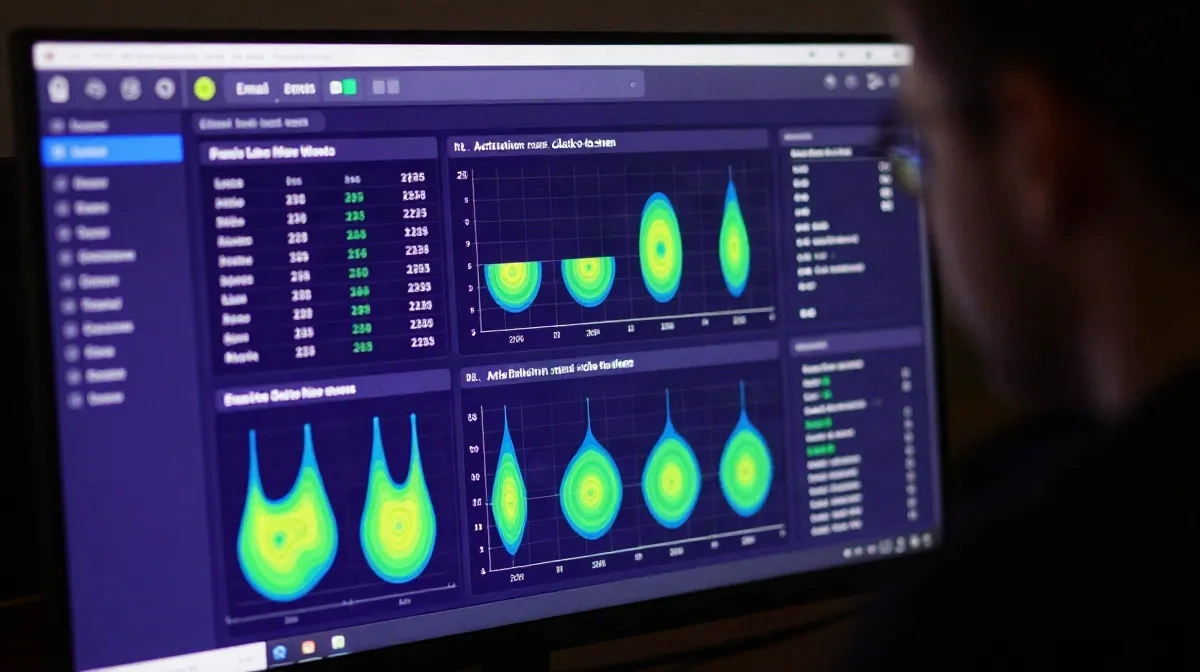
Send-time optimization (STO) is the most widely marketed AI feature in lifecycle tooling and also the most frequently over-claimed. Each user has a recurrent engagement window -- the time of day and day of week when they most reliably open email. The model learns this pattern from historical open timestamps and schedules individual sends to land in that window.
The constraint: STO requires per-user sample volume to produce individualized predictions. Below approximately 10 observed open events per user, the model falls back to cohort-level averages. For a list under 10,000 contacts, or a product with naturally low email engagement, STO delivers segment-level scheduling with an AI label on top -- not genuine per-user optimization.
Three questions to ask before enabling STO on a new deployment:
What is the minimum per-user open history the model requires before it stops defaulting to cohort averages? Most platforms do not disclose this threshold.
Is STO bounded by your domain warmup schedule? Concentrating sends in the same time window across a large list creates delivery spikes that damage IP reputation.
Does STO enforce hard sending windows -- no sends between 2am and 7am in the recipient's local timezone? Without this, STO can schedule sends at hours that match historical open patterns but generate spam complaints at scale.
Evaluating AI Lifecycle Infrastructure: Five Criteria
AI automation platforms converge on nearly identical claims. The criteria that differentiate them for engineering teams:
Trigger latency. Measure milliseconds from Segment event to SMTP handshake with a controlled webhook. Sub-second is the target; above 2-3 seconds for high-intent triggers is disqualifying.
Delivery observability. Per-send trace accessible via API or export to your own monitoring stack. If you cannot query a trace by send ID, you cannot debug delivery events.
SDK quality. Node, Python, Go clients with idempotency keys and exponential backoff. Missing idempotency keys means duplicate sends under retry conditions.
Variant transparency. Can you query which variant was selected for a given send and why? Without this, model debugging is guesswork.
Behavioral model ownership. Is the trained model portable, or does it live exclusively on vendor infrastructure? Lock-in at the model layer is more expensive than lock-in at the UI layer.
At the usage, here is what shows up in the traces: most platforms pass two or three of these. The ones that do not pass on observability are the ones where debugging a deliverability drop takes days rather than minutes, because you are working backward from symptoms with no trace data.
Where the Market Is Heading in Late 2026
Three signals worth tracking.
The global AI marketing market was valued at $47.32 billion in 2026 and is projected to reach $107.5 billion by 2028. Most of that growth concentrates in the content generation and personalization layer, while the delivery infrastructure layer remains fragmented and under-invested by comparison.
Second signal: agentic email flows. Several platforms are shipping autonomous agents that handle A/B test design, list hygiene, and suppression list management without human review on each decision. The operational question -- who owns the agent's decisions when deliverability degrades -- is not yet answered by any major vendor's terms of service.
Third signal: the move away from segment-based personalization toward event-stream personalization. Segment-based models update on a batch schedule; event-stream models update on every ingested event. For lifecycle flows where the behavioral window is short -- a trial user who must activate within 14 days -- the latency difference between the two models determines whether the trigger fires in the right window or misses it entirely.
If your team has already built this module in-house, you know exactly why engineering teams extract it into purpose-built infrastructure.