SendGrid alternatives: 5 email APIs to switch to in 2026
Summary
SendGrid alternatives worth evaluating in 2026 split into two camps: developer-first APIs (Resend, Postmark, Mailgun, Amazon SES) and all-in-one platforms (Brevo). We compared entry pricing, cost at 100,000 emails a month, SDK quality, and the deliverability signals each vendor actually publishes. Resend comes out ahead for teams building a new product from scratch. Postmark wins when transactional deliverability is the one metric you can't regress on. SES wins on raw cost at AWS-native shops.
The real SendGrid alternatives worth evaluating in 2026 are Resend, Postmark, Mailgun, Amazon SES, and Brevo. Resend wins for teams building a new product today, on SDK quality and a workable free tier. Postmark wins when transactional deliverability can't regress. SES wins on raw cost for AWS-native stacks. SendGrid still works, but the brand is fading into Twilio.
Why teams look for a SendGrid alternative in 2026
SendGrid used to be the default answer to "how do I send transactional email." That default has weakened for two reasons that show up in the traces, not just in vibes.
First, the product itself moved. As of 2026, sendgrid.com no longer exists as an independent marketing site; it redirects into twilio.com, folded under the wider Twilio customer engagement platform. The API still works. The account, billing, and support experience now inherits Twilio's broader structure, and several teams report that this made support slower, not faster.
Second, a generation of infrastructure-minded teams grew up expecting an API that reads like a modern SDK, not a REST wrapper from 2013. Idempotency keys, typed client libraries, and a template system that doesn't require hand-rolled <table> HTML are table stakes now. That's the gap Resend was built to fill, and why it shows up as our pick below.
Three signals that changed our ranking
We didn't rank on vendor marketing copy. Three things moved products up or down the list.
Pricing shape, not just the headline number. SendGrid's Essentials tier starts at $19.95/mo, but the free trial caps at 100 emails/day for 60 days, after which you must upgrade. Resend's free tier runs indefinitely at 3,000 emails/month. Amazon SES has no monthly platform fee at all on its Essentials or a la carte pricing, you pay per email from the first send. That structural difference matters more than the sticker price at any single volume tier.
Whether transactional and marketing traffic share infrastructure. Postmark's entire pitch is that they don't. Message Streams routes transactional email (password resets, receipts) and promotional/broadcast email through physically separate sending paths, so a newsletter send that trips a spam filter can't drag down your password-reset deliverability. SendGrid, Mailgun, and Brevo all mix these to varying degrees inside one account.
Published deliverability signal versus vendor claim. We looked for numbers a vendor is willing to put on its own site and stand behind: Postmark's 95% customer happiness rating (rolling 60-day), Brevo's 4.5/5 G2 aggregate across 2,500+ reviews, Amazon SES's named references (Netflix, Duolingo, Amazon Retail itself). SendGrid's own marketing pages talk about total volume (200B+ emails/month), which is a scale claim, not a deliverability claim.
Migration notes: what actually breaks when you leave SendGrid
If you're planning to migrate off SendGrid, the API surface is not usually the hard part. Three things are:
Dedicated IP reputation does not transfer. If you've spent months warming up a dedicated IP on SendGrid, moving to a new provider means starting that warmup process again, whether that's Resend's managed autoscale warmup, Postmark's vetted shared IPs, or SES's own IP pool. Budget two to four weeks of gradually ramped sending volume before you cut over fully.
Webhook payload shapes differ. SendGrid's event webhook format, Postmark's webhook JSON, and SES's SNS-based notification format are not interchangeable. If your application parses bounce and complaint events to drive suppression logic, that parsing code needs a rewrite, not a config change.
Template migration is manual in most cases. None of these providers offer a one-click importer for another vendor's dynamic templates. If you're on SendGrid's dynamic templates today, budget time to rebuild them, ideally as React Email components if you're moving to Resend, since that's the one migration path that also improves your template maintainability going forward.
Who should not switch
If you're already on Twilio for SMS or voice and SendGrid is one line item in a consolidated invoice, the migration cost (IP warmup, webhook rewrites, template rebuilds) may not be worth it purely to chase a marginally better developer experience elsewhere. SendGrid at Twilio scale still delivers; the complaints in this piece are about trajectory and account experience, not a broken product.
At-a-glance
| Resend | Postmark | Amazon SES | Mailgun | Brevo | |
|---|---|---|---|---|---|
| Entry-tier pricing (checked Sep 2026) | Free: 3,000 emails/mo (100/day cap). Pro $20/mo for 50,000 emails. | Free: 100 emails/mo, no expiry. Basic $15/mo for 10,000 emails, then $1.80 per 1,000 overage. | No monthly plan fee on Essentials or a la carte. $0.10 to $0.16 per 1,000 emails depending on plan and volume tier. | Free: 100/day. Basic $15/mo for 10,000 emails. Foundation $35/mo for 50,000. | Free forever, approval-gated volume. Starter $9/mo ($8.08 billed yearly) for 5,000 emails/mo. |
| Cost sending 100,000 emails/mo | $90/mo (Scale plan, 100,000 emails included). | Basic plan plus overage lands around $170-190/mo unless upgraded to Pro/Platform tiers. | Roughly $10-16/mo a la carte ($0.10-$0.16 per 1,000), no platform fee on Essentials. | $90/mo (Scale plan, 100,000 emails included). | Roughly $60-90/mo on the Standard plan depending on the email/contact volume slider. |
| Product shape | API-first: transactional and broadcast sending, native React Email templates. | Transactional-only by design. Broadcast traffic is isolated on separate Message Streams. | Raw sending primitive (API/SMTP) plus Mail Manager for inbound routing. No marketing UI. | Four bundled products: Send, Optimize, Validate, Inspect. | All-in-one marketing platform (email, SMS, WhatsApp, CRM, live chat) with transactional email as one module. |
| SDK and developer experience | Node, Python, Ruby, PHP, Go, Rust, Java, Elixir, .NET SDKs, plus native React Email components. | Official curl, Node, Python, Ruby/Rails, PHP, and C# libraries. | Standard AWS SDKs (boto3, aws-sdk-js, etc.), IAM-scoped keys. No email-specific SDK layer. | curl, PHP, Node, Ruby, Python, Java, Go, C# SDKs across four sub-products. | REST API and SDKs exist, but the primary interface is the no-code campaign builder, not the API. |
| Deliverability signal the vendor publishes | Proactive blocklist tracking, managed dedicated IPs with automatic warmup, BIMI guidance. | Reports up to 4x faster inbox delivery than some competitors. 95% customer happiness rating, rolling 60-day window. | Used internally at Amazon Retail plus Netflix and Duolingo as named references. Virtual Deliverability Manager is a metered add-on on the Essentials plan. | 600B+ emails/year at Sinch scale. Reputation complaints surface more often in developer forums than for Postmark or SES. | 4.5/5 aggregate on G2 (2,500+ reviews), 3,300+ Capterra reviews. Deliverability specialist support starts at the Professional tier. |

Resend
- SDKs for Node, Python, Ruby, Elixir, Go, Java, and .NET, with idempotency handled for you
- Native React Email template support, no table-layout HTML hacks
- Free tier covers 3,000 emails/month (100/day cap), $20/mo unlocks 50,000
- Founded 2023, a shorter deliverability track record at extreme scale than SendGrid or SES
- Dedicated IPs and advanced deliverability tooling like BIMI are newer additions, less battle-tested
- No native marketing/newsletter campaign UI; Audiences and Broadcasts is a lighter feature set than Brevo
The default pick for a greenfield product built by a small engineering team.
Postmark
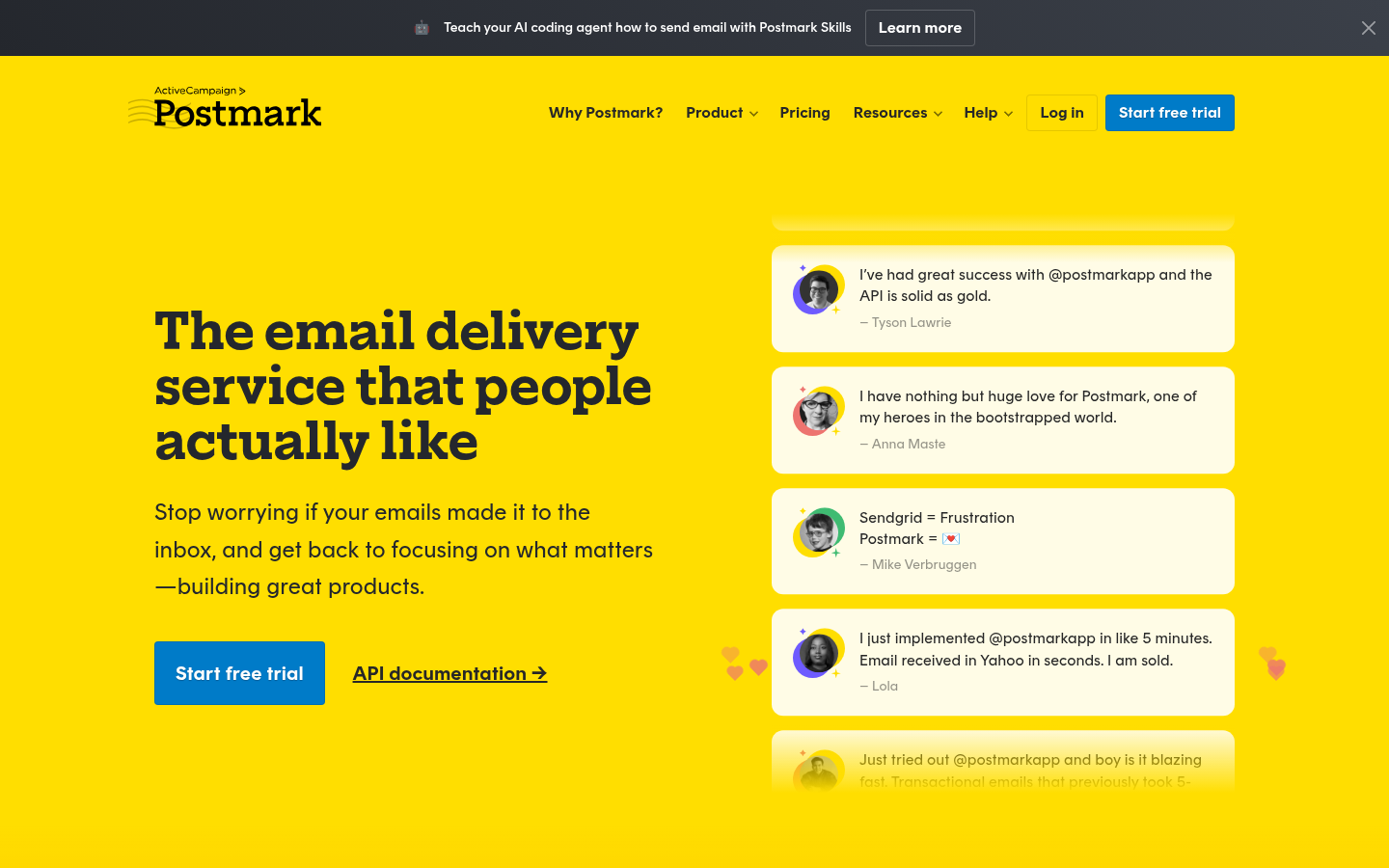
- Message Streams isolate transactional and broadcast sending so a newsletter blast can't hurt password-reset deliverability
- 95% customer happiness rating tracked over rolling 60-day windows, published on their own site
- Official libraries for curl, Node, Python, Ruby/Rails, PHP, and C#
- No high-volume marketing campaign product by design, so it becomes a second tool if you also send newsletters
- Overage pricing on the Basic tier ($1.80 per 1,000) is steeper than usage-only providers like SES
- Bulk API is a 2026 addition, still newer than the core transactional API
The safest pick when transactional deliverability is the one metric you can't regress on.
Amazon SES
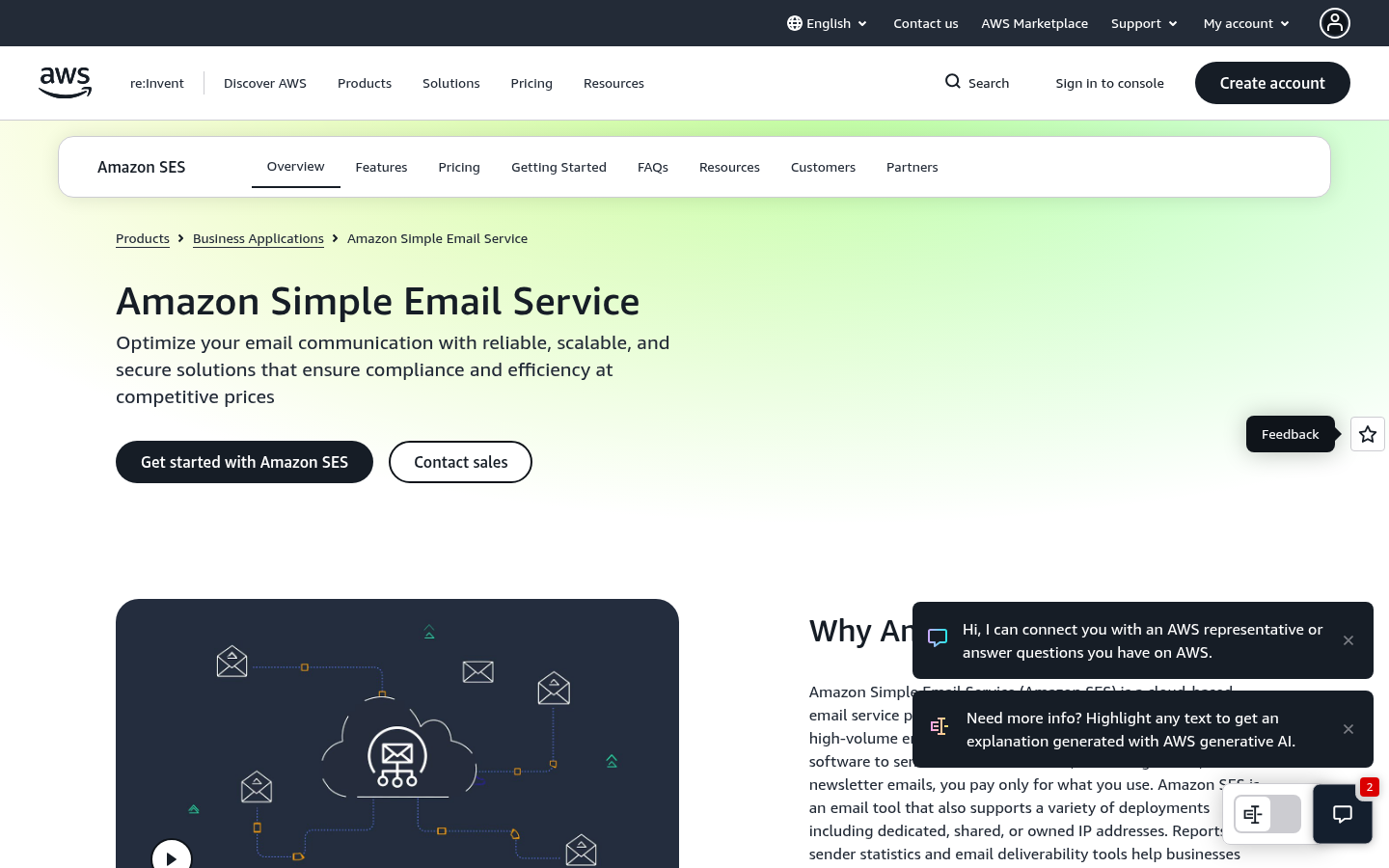
- Pay-per-email at $0.10-$0.16 per 1,000 with no monthly platform fee on Essentials or a la carte billing
- Native IAM, CloudWatch, SNS/SQS, and EventBridge integration for teams already living in AWS
- Proven at trillion-email/year scale internally at Amazon Retail, plus Netflix and Duolingo as public references
- No template editor and no marketing UI, it is a sending primitive you wire up yourself
- New accounts start in the SES sandbox and must request production access before sending to unverified addresses
- Deliverability tooling (Virtual Deliverability Manager) is a metered add-on, not a guided onboarding like Postmark's
The cheapest option at real scale for a team that already owns AWS observability.
Mailgun
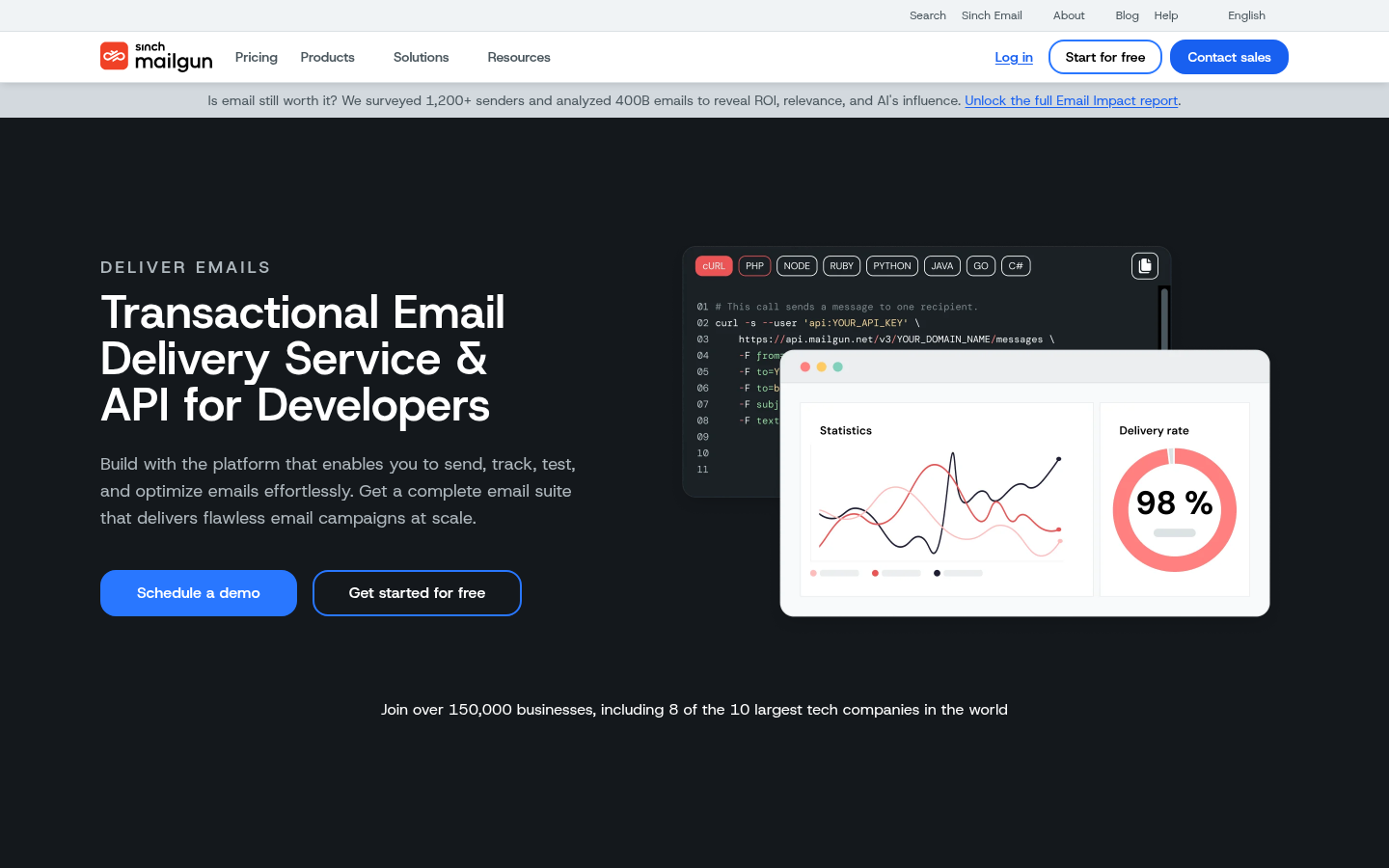
- Four bundled products (Send, Optimize, Validate, Inspect) cover list hygiene and pre-send QA that most competitors sell separately
- 150,000+ businesses by their own count, including 8 of the 10 largest tech companies
- SDKs for curl, PHP, Node, Ruby, Python, Java, Go, and C#
- Historically noisier deliverability reputation than Postmark or SES; IP reputation complaints surface in developer forums
- Four sub-products means more surface area to configure than a single-purpose API
- Free tier caps at 100 emails/day, tighter than Resend's 3,000/month burst allowance
A reasonable middle ground if you want validation and inbox testing without adding two more vendors.
Brevo
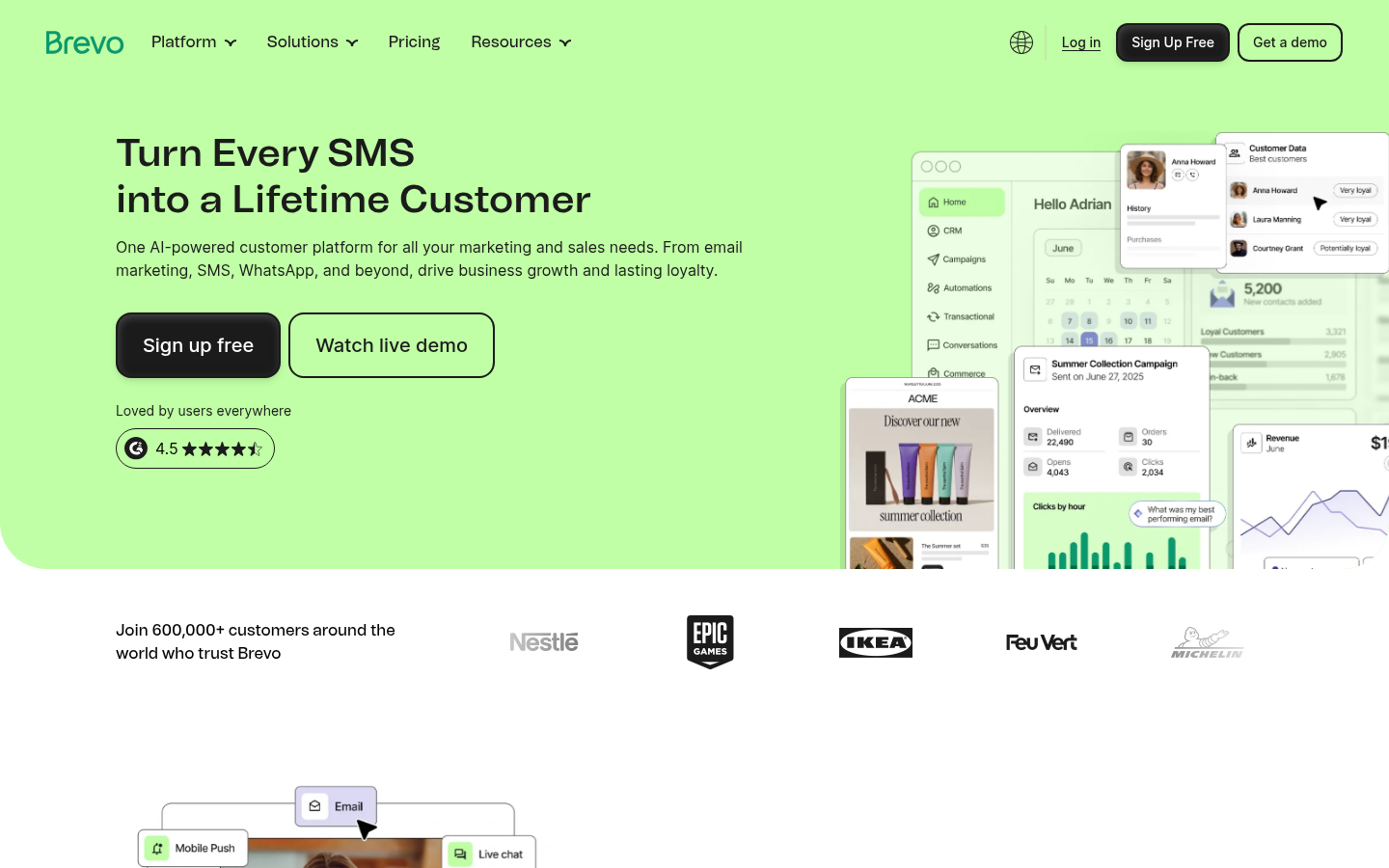
- Transactional email, SMS, WhatsApp, live chat, and a built-in CRM in one dashboard, one invoice
- 4.5/5 aggregate rating on G2 across 2,500+ reviews, 3,300+ on Capterra
- 150+ native integrations (Shopify, WooCommerce, Salesforce, Stripe) without middleware
- The core product is the marketing dashboard, not an API-first developer experience; transactional email is one tile among many
- AI agents (Aura) and newer features add UI surface a pure infrastructure team does not need
- Deliverability specialist support only starts at the $449/mo Professional tier
Makes sense when the same team owns email infra and lifecycle marketing and does not want two vendors.
Verdict
Resend is the pick for a team building a new product today: modern SDKs, native React Email support, and a free tier generous enough to ship on. Postmark stays the safer choice when transactional deliverability alone can't regress, thanks to Message Streams keeping broadcast traffic off the same pipes. Amazon SES wins on raw cost for AWS-native shops willing to wire up their own tooling. SendGrid remains workable at Twilio scale, but the standalone brand is visibly being absorbed.
How we tested
We read each vendor's current pricing page directly (checked live in September 2026), each product's own feature and deliverability claims, and cross-referenced independent signals where a vendor publishes them: G2 and Capterra aggregate ratings, published customer happiness metrics, and named enterprise references. We did not run our own inbox-placement benchmark across six providers for this comparison. Deliverability notes above are the vendors' own published claims and third-party review signals, and we call out which is which. custom_score blends pricing transparency, SDK and DX quality, and product scope fit for an infrastructure-first buyer. It is not a lab-tested inbox placement percentage.