Mailchimp alternatives: 6 tools to switch to in 2026
Summary
Mailchimp alternatives worth switching to in 2026: Brevo for a like-for-like swap, Customer.io for event-driven flows, Klaviyo for e-commerce, Resend for developers, ActiveCampaign for visual automation, Kit for creators. We compared list prices in USD, free tiers, transactional API access and trigger models as listed on 2026-10-25, so you can pick based on how your emails are actually sent, not on feature checklists.
Verdict. Among the Mailchimp alternatives we compared, Brevo is the best pick for most teams in 2026: a comparable editor and automation model, pricing tied to email volume, and a transactional API included on every plan. Customer.io wins for product-event flows, Resend for developers, Klaviyo for stores.
Why teams leave Mailchimp
Three constraints come up again and again. The free plan now stops at 250 contacts and 500 sends a month, with no automation. Send limits are tied to your contact count: 10x on Essentials, 12x on Standard, 15x on Premium. And transactional email lives in a separate product, so one mailbox of password resets and one of newsletters end up in two billing systems.
None of this is a flaw if you send a monthly newsletter. It becomes a constraint once part of your email is triggered by what a user did in your app.
Marketing tool or sending layer
The seven products here fall into three groups, and picking the group first saves most of the shortlist work.
Marketing dashboards: Mailchimp, Brevo, ActiveCampaign, Kit. Contact lists, templates, visual automations. Brevo is the only one that ships transactional API access on every plan.
Event-driven platforms: Customer.io and Klaviyo. Both build flows from behavior. Customer.io expects app events, objects and a CDP. Klaviyo expects store data.
Developer email API: Resend. Code-first sending with SDKs, SMTP, webhooks and React Email templates, plus broadcasts for marketing sends.
Pricing at a glance
Entry prices as listed on 2026-10-25, and what each bill scales with:
Mailchimp: Essentials $13/mo at 500 contacts. Free: 250 contacts, 500 sends. Scales with contacts.
Brevo: Starter from $9/mo. Free: 300 emails a day. Scales with email volume.
Customer.io: Essentials from $100/mo. No free plan, 14-day trial. Scales with profiles and emails.
Klaviyo: From $20/mo at 500 profiles. Free: 250 profiles. Scales with active profiles.
Resend: Pro $20/mo for 50,000 emails. Free: 3,000 emails a month. Scales with emails.
ActiveCampaign: Starter $15/mo at 1,000 contacts. No free plan, 14-day trial. Scales with contacts.
Kit: Creator $33/mo at 1,000 subscribers. Free: up to 10,000 subscribers. Scales with subscribers.
The lowest sticker price is not the lowest cost. A list that grows from 500 to 20,000 contacts changes the bill on every contact-based tool, while Resend and Brevo track send volume. Model the bill at your real volume before you migrate.
Which one for which team
You send newsletters and a few automations. Brevo or Kit. Brevo for a business list, Kit if you sell digital products or a paid newsletter. Both remove the contact-count send cap.
Your product emits events and you want lifecycle flows. Customer.io. Events, objects, reverse ETL and webhooks are part of the base plan. The trade-off is a $100/mo floor and a bill you should forecast per profile.
You run a store. Klaviyo. Its unified profile and native integrations are the reason it dominates commerce. Billing by active profiles means list hygiene directly affects cost.
You own the sending code. Resend. Official SDKs, SMTP relay, batch sending of up to 100 emails per request, and a Pro plan at $20/mo for 50,000 emails. Expect to build your own journeys or pair it with a workflow tool.
You want deep visual automation. ActiveCampaign. Starter at $15/mo billed yearly, 950+ automation recipes, multiple triggers. Transactional email is an add-on, and there is no free plan.
What to check before you migrate
Authentication. Set up SPF, DKIM and DMARC alignment on the new sending domain before the first production send. Do it in parallel with the old provider.
Warmup. Moving a large list to a new platform means a new IP or shared pool reputation. Ramp volume over several weeks and watch bounce and complaint rates per mailbox provider.
Suppression lists. Export bounces, complaints and unsubscribes from Mailchimp and import them first. Skipping this is the fastest way to damage a fresh sender reputation.
Template parity. Mailchimp templates do not port one to one. Budget time to rebuild the three or four you actually use.
Webhooks and events. If anything downstream listens to open, click or bounce events, confirm the new provider's payload shape and signing before you cut over.
Where the ratings stand
Aggregate ratings are a rough signal, not a ranking. Klaviyo shows 4.6 on G2 (1,368 reviews) and 4.6 on Capterra (539). ActiveCampaign shows 4.6 on Capterra (2,572 reviews). Kit shows 4.6 on Capterra (244). Customer.io shows 4.7 on Capterra but on a small base of 87 reviews. Brevo advertises 4.5 on G2 across 2,500+ reviews. Mailchimp sits at 4.4 on G2 and 4.5 on Capterra on the largest review base of the group. Resend has only a handful of G2 reviews, so its rating is too thin to compare.
Bottom line
For most teams the question is not which tool has the most features but which unit your bill scales with and how your emails get triggered. Start from that, shortlist two, and run a one-week parallel send before you move the whole list.
At-a-glance
| Mailchimp | Brevo | Customer.io | Klaviyo | Resend | ActiveCampaign | Kit (formerly ConvertKit) | |
|---|---|---|---|---|---|---|---|
| Entry paid price (as listed 2026-10-25) | Essentials $13/mo at 500 contacts; Standard $20/mo at 500 contacts | Starter from $9/mo (5,000 emails); Standard from $18/mo | Essentials from $100/mo (5,000 profiles, 1M emails) | Email plan from $20/mo at 500 profiles | Pro $20/mo for 50,000 emails | Starter $15/mo at 1,000 contacts, billed yearly | Creator $33/mo at 1,000 subscribers ($390 billed yearly) |
| Free tier | 250 contacts, 500 sends/mo, 250/day, no automation | Free plan, 300 emails/day | No free plan, 14-day trial | 250 profiles, 500 emails/mo | 3,000 emails/mo, 100/day cap | No free plan, 14-day trial | Up to 10,000 subscribers, unlimited broadcasts |
| Transactional email and API | Separate product (Mailchimp Transactional) | REST API, SMTP and webhooks on every plan | Included on every plan, custom SMTP supported | Marketing-first; public REST API with rate limits | Core product: REST, SMTP, SDKs, batch sending, inbound | Paid add-on on all tiers | Not a transactional tool; creator broadcasts only |
| Behavioral and event-driven triggers | Flows from audience and e-commerce events; Free has none | Web and event tracking from Standard; unlimited workflows | Native: API events, SDKs, CDP, reverse ETL, webhooks | Strong for e-commerce events on a unified profile | Automations at $0.0015/run past 10,000 free runs | Visual automations, multiple triggers, 950+ recipes | Visual automations on paid plans, tag-based |
| What the bill scales with | Contacts, plus send cap of 10x to 15x contacts | Email volume tier, then contacts on Professional | Profiles at $0.009 each, extra 1,000 emails $0.12 | Active profiles | Emails per month, overage $0.90 per 1,000 | Contacts, send cap 10x to 15x contacts | Subscribers, no send limit |
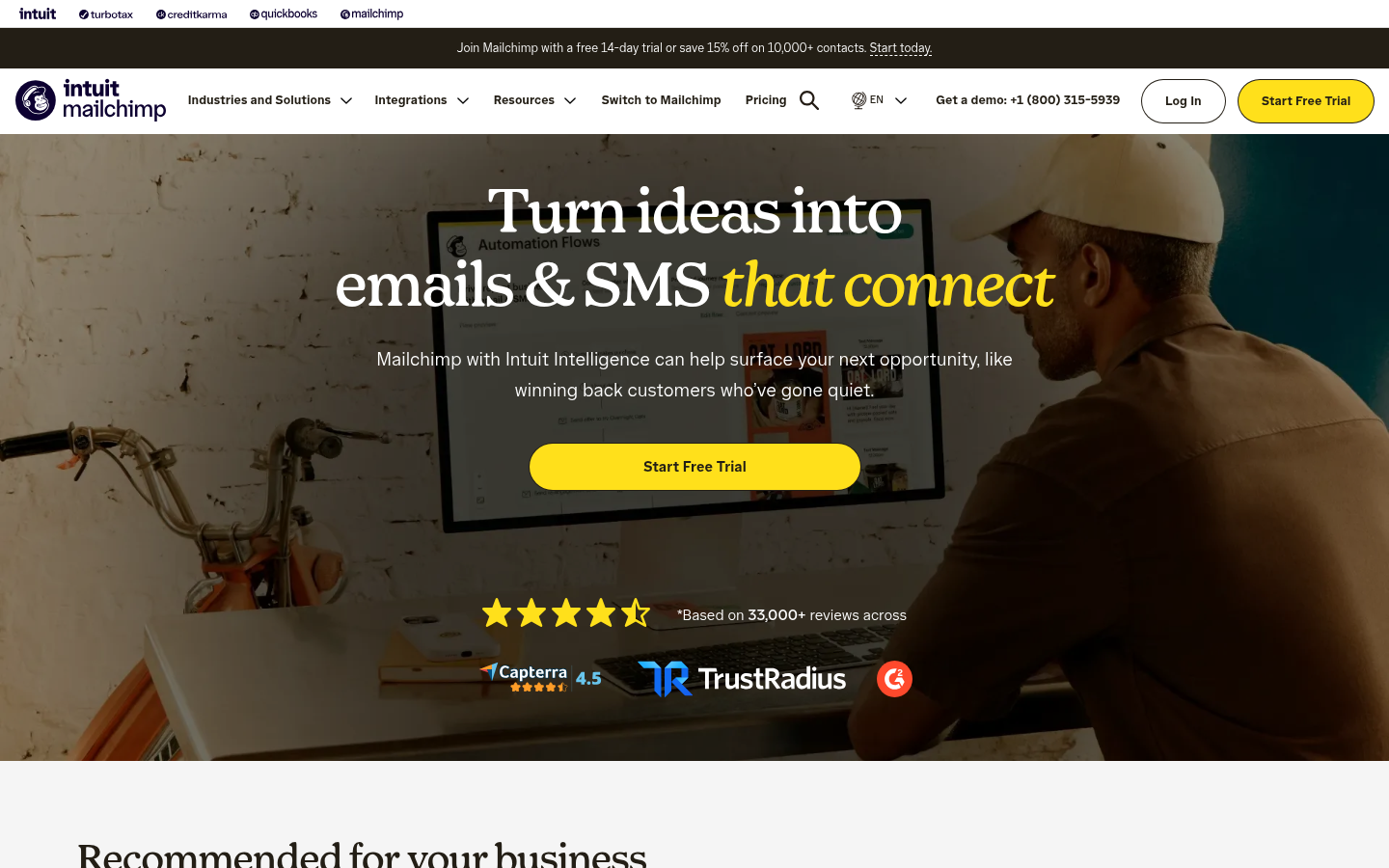
Mailchimp
- Largest template library and the most familiar editor on this list
- Capterra 4.5 and G2 4.4 on large review bases
- Email, SMS and e-commerce flows in one dashboard
- Free tier dropped to 250 contacts and no automation
- Send cap tied to contacts, 10x on Essentials
- Premium jumps to $350/mo; transactional is a separate product
Fine for newsletters, awkward once you need event-driven flows or API sends.
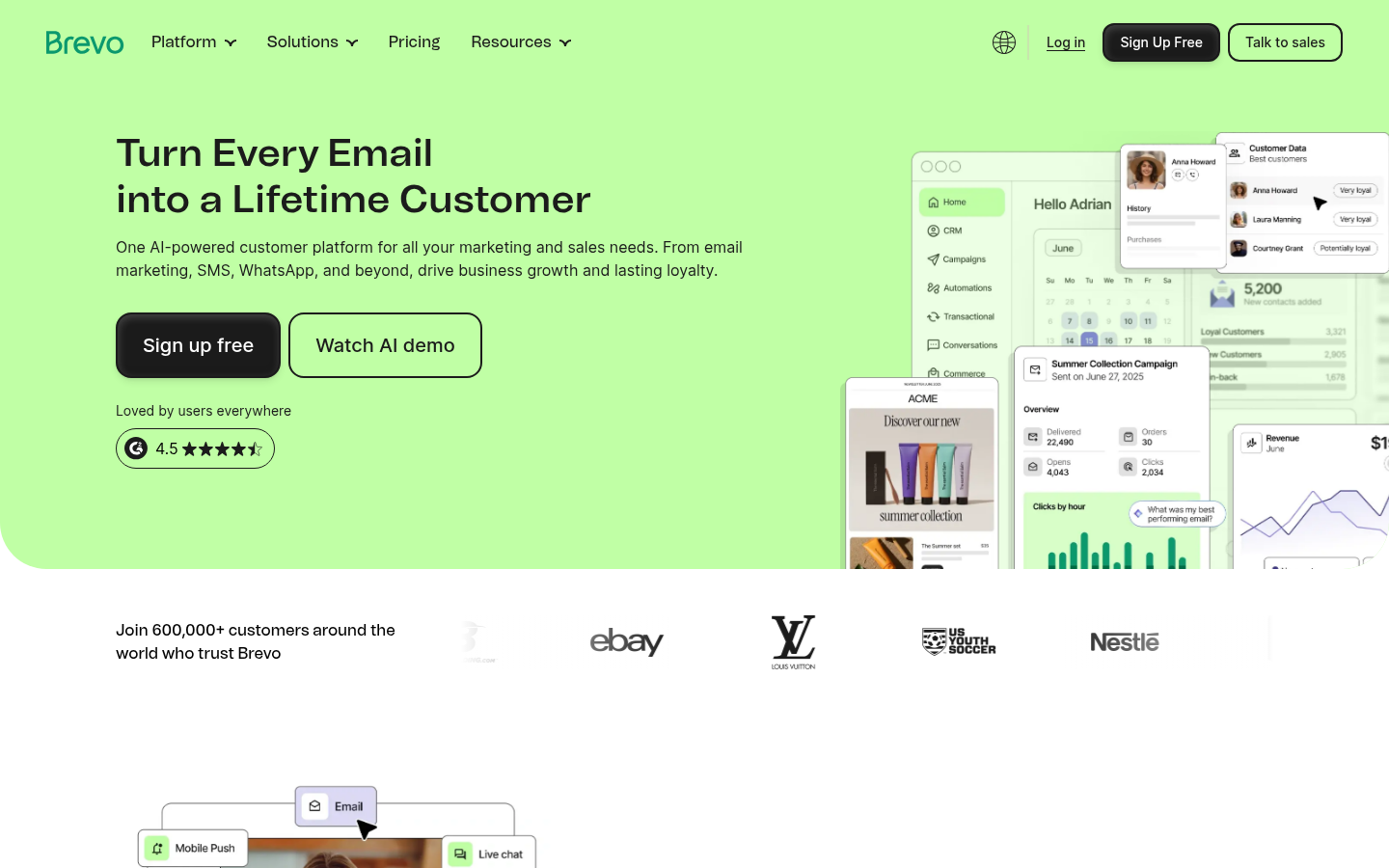
Brevo
- Transactional API, SMTP and webhooks on every plan, including Free
- Starter at $9/mo undercuts Mailchimp Essentials at similar volume
- Priced by email volume, so a growing list does not raise the bill by itself
- Automation, A/B testing and send-time optimization start at Standard
- Dashboard is broad (CRM, chat, SMS) and heavier than an API-first tool
- Dedicated IP and SSO sit in the $2,499/mo Enterprise tier
The closest like-for-like swap: marketing dashboard plus a real transactional API.
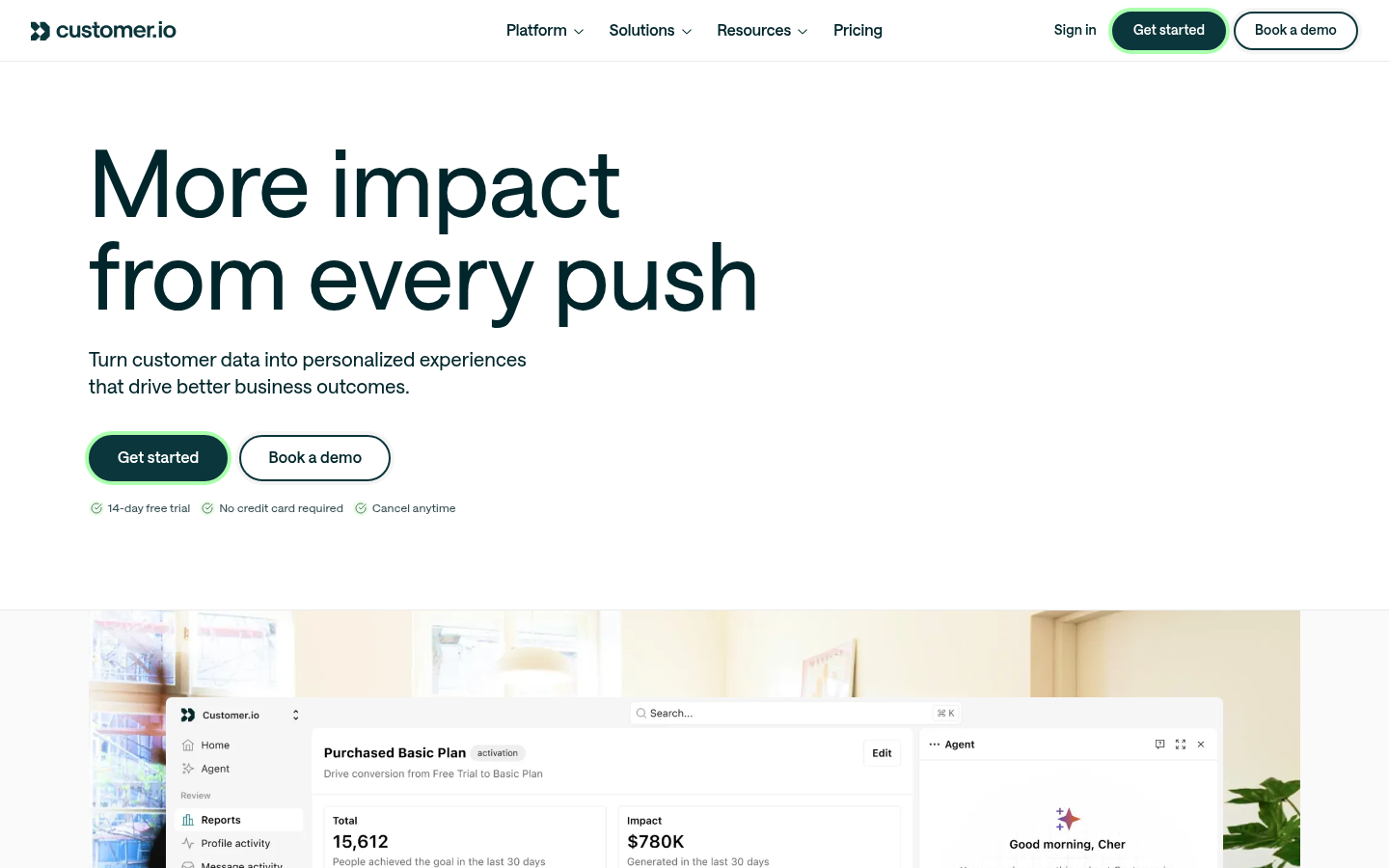
Customer.io
- Events, objects and reverse ETL are first-class, not an add-on
- Transactional, push, in-app and webhooks on the same workflow builder
- Unlimited seats and unlimited API calls on every plan
- No free plan, Essentials starts at $100/mo
- Profile-based billing needs a forecast before you migrate
- Managed deliverability starts at Premium, from $1,000/mo
The right pick when triggers are driven by product events, not list segments.
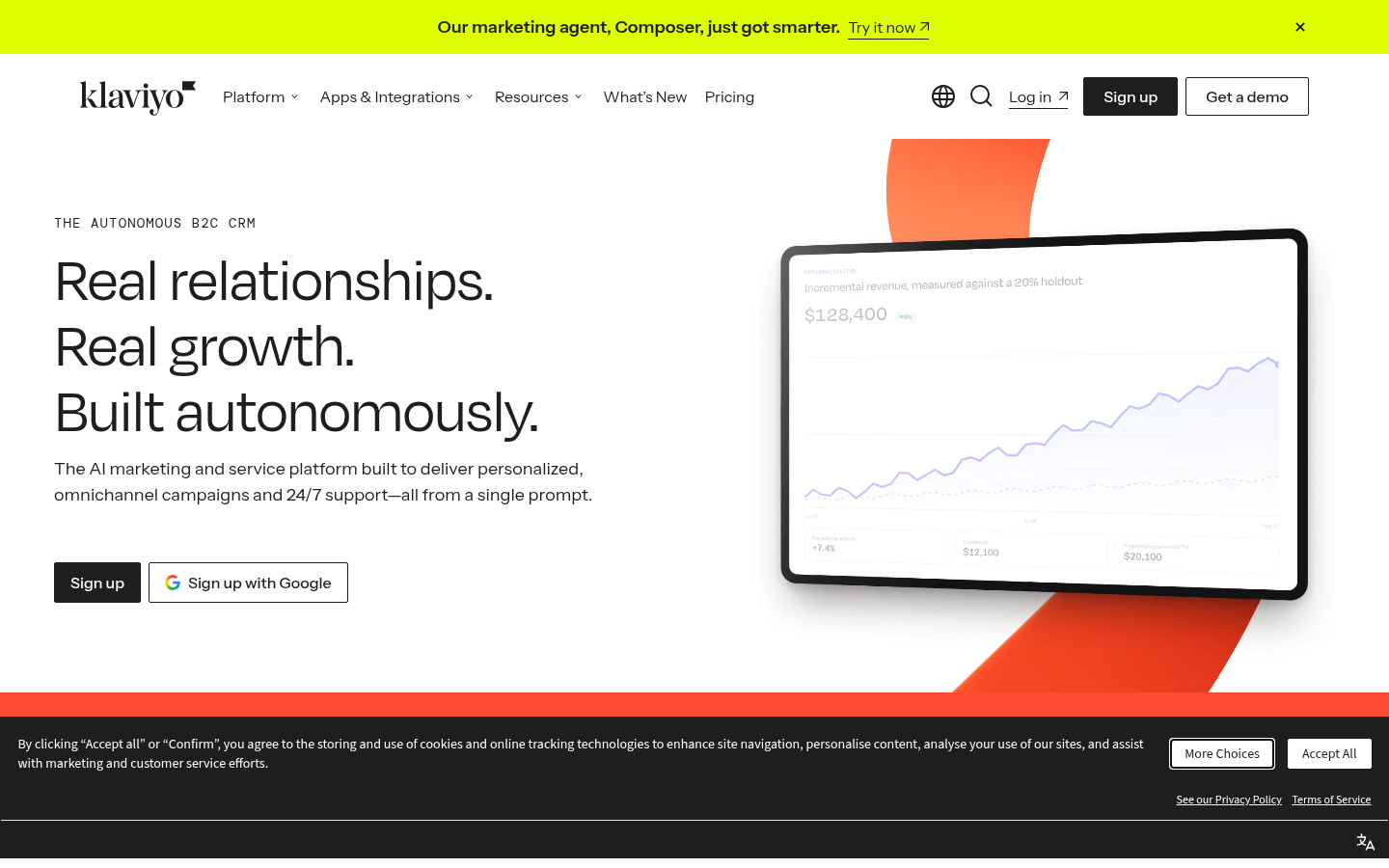
Klaviyo
- Unified profile across email, SMS, WhatsApp and push
- Native store integrations with revenue attribution
- G2 4.6 across 1,368 reviews, Capterra 4.6 across 539
- Billed by active profiles, so suppressed or dormant contacts matter
- Free plan caps at 250 profiles and 500 emails
- Built around B2C commerce data, less natural for SaaS events
Strongest on commerce data. Overkill and costly if you only send newsletters.
Resend
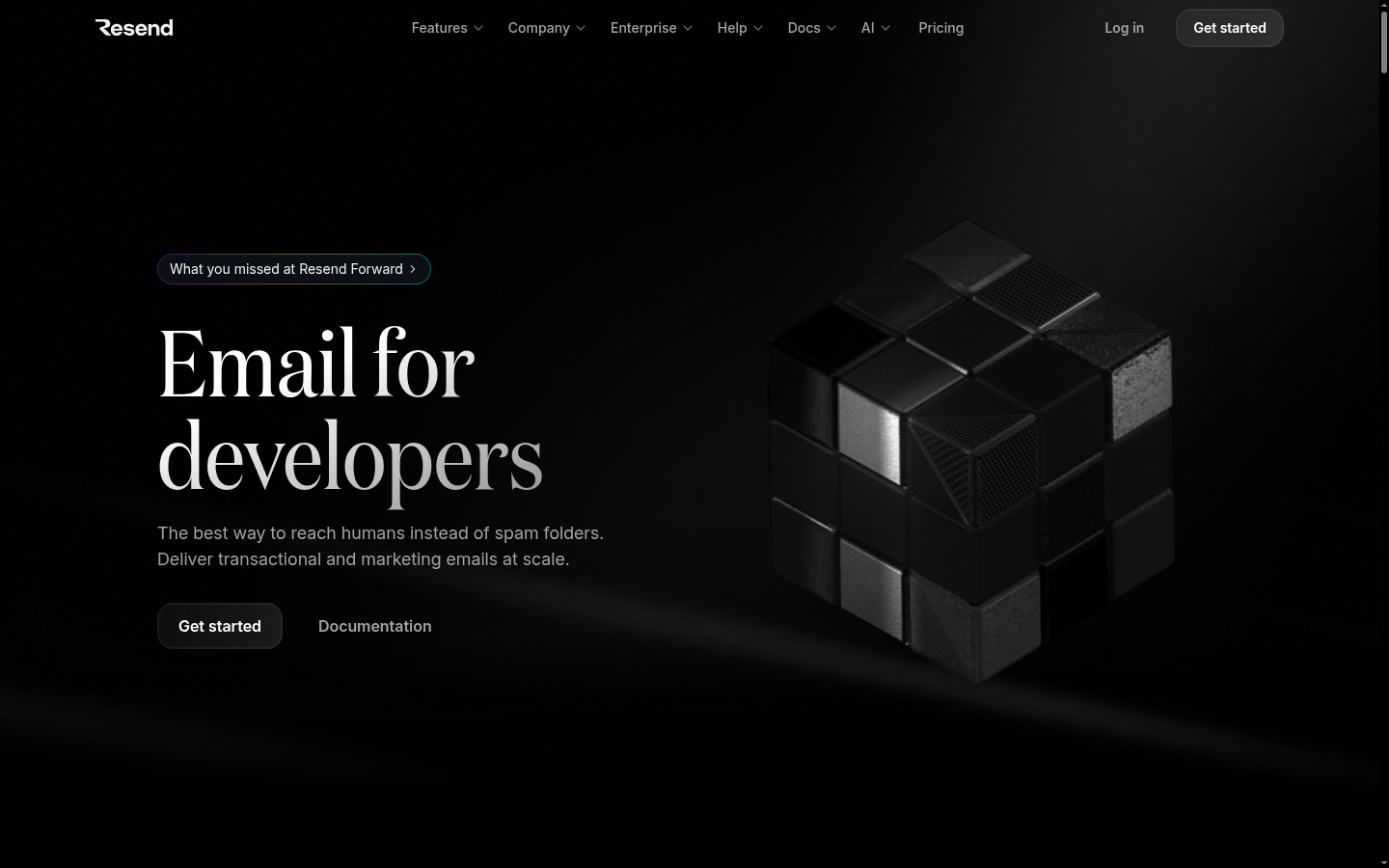
- REST API, SMTP relay and SDKs for Node, Python, Ruby, Elixir, Go and Java
- Pro at $20/mo covers 50,000 emails with webhooks and domain controls
- React Email templates and batch sending of up to 100 emails per request
- Marketing tooling is thin next to Mailchimp: no drag-and-drop journey builder
- Free plan is capped at 100 emails a day
- Only 30-day data retention below Enterprise
Best when email is code in your repo, weaker for non-technical marketers.
ActiveCampaign
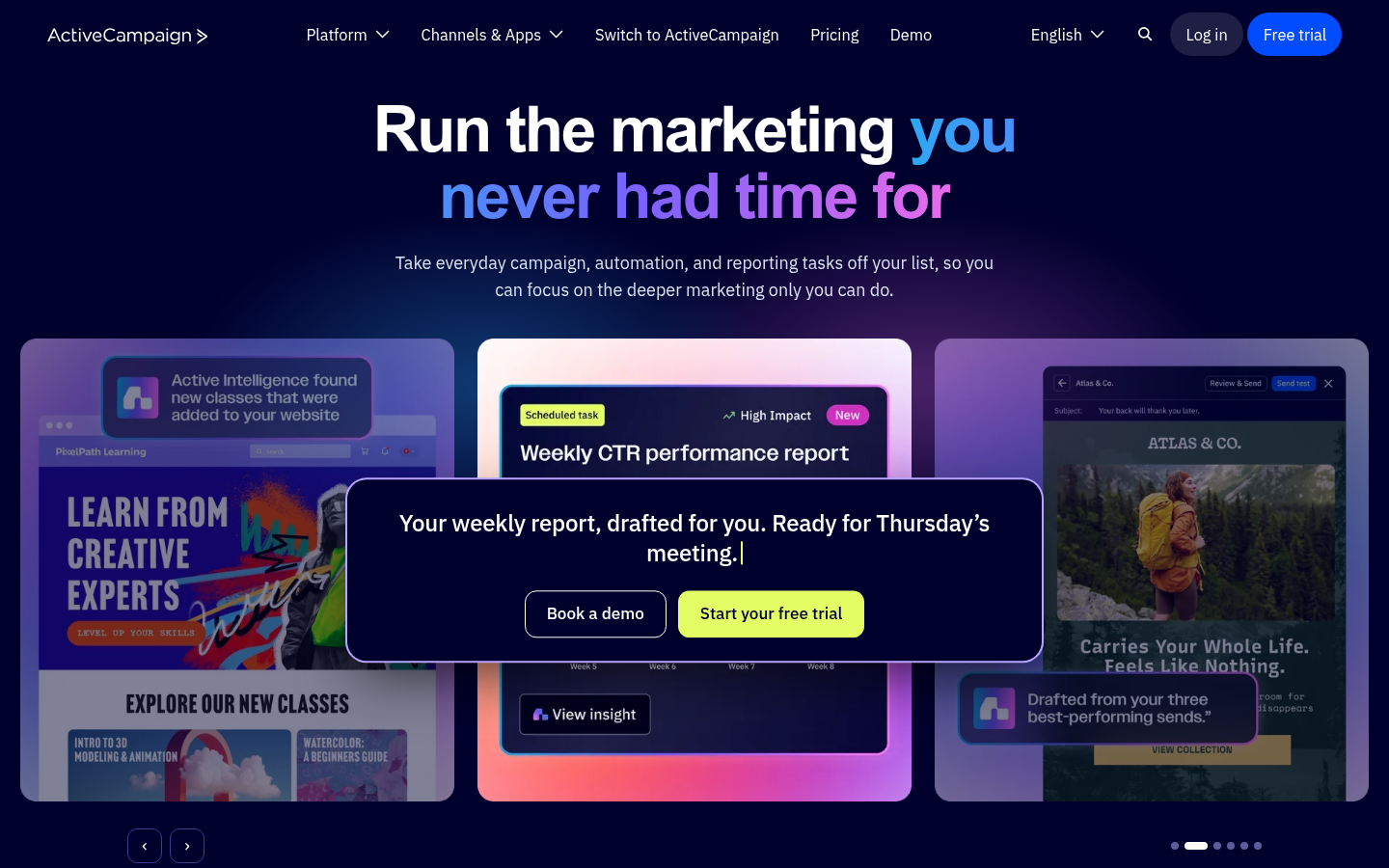
- Visual builder with multiple triggers and 950+ automation recipes
- Starter at $15/mo for 1,000 contacts, billed yearly
- Capterra 4.6 across 2,572 reviews
- No free plan, only a 14-day trial
- Transactional email is a paid add-on on every tier
- Send cap is 10x to 15x contacts depending on tier
Powerful automation for marketers, not an API-first sending layer.
Kit (formerly ConvertKit)
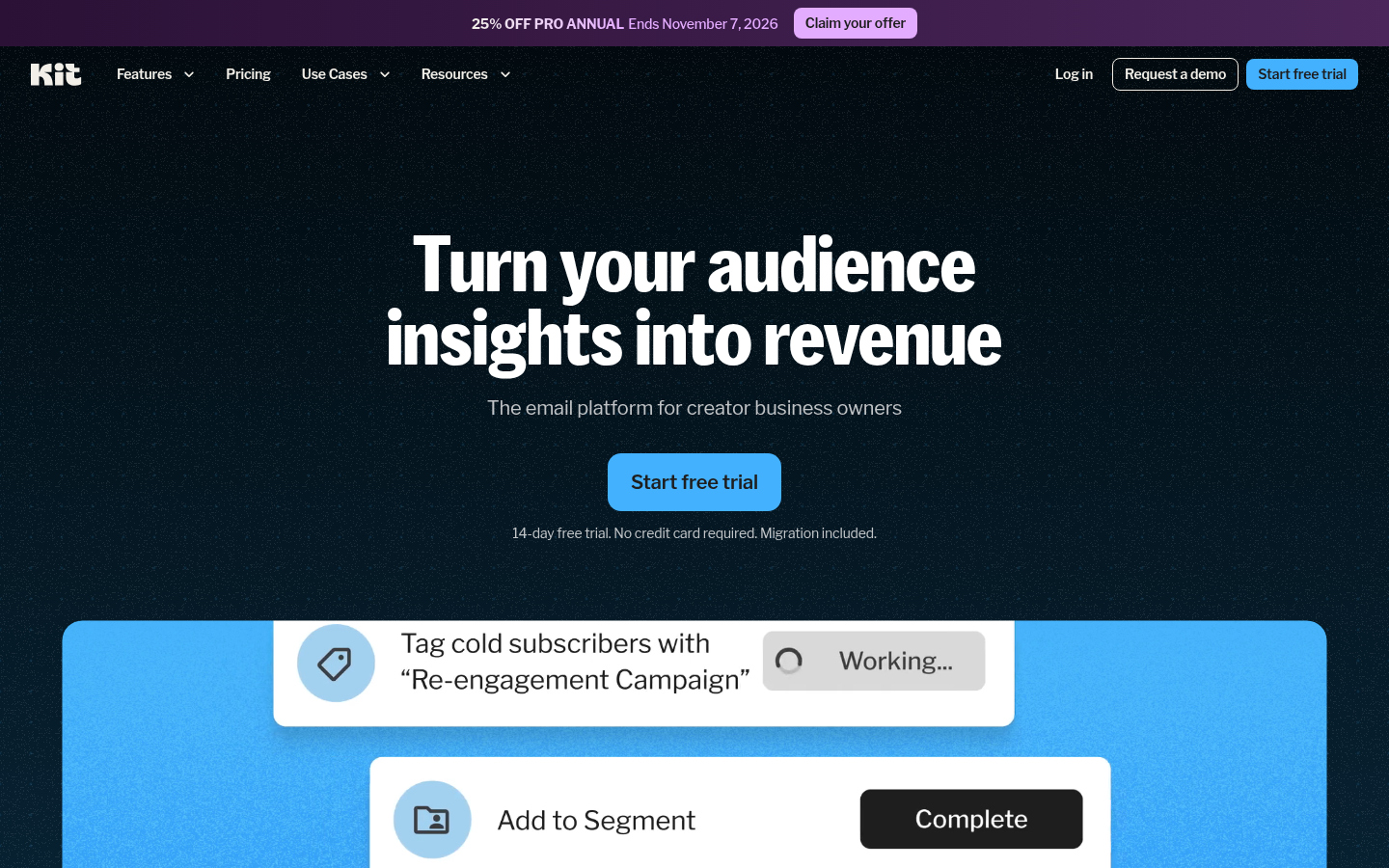
- Free up to 10,000 subscribers with unlimited broadcasts
- No sending limits on any plan
- Commerce built in: digital products, subscriptions, tip jars
- Creator plan starts at $33/mo month to month at 1,000 subscribers
- Automations and sequences are paid-only
- Not designed for transactional or product-event email
Good for audience-led businesses, wrong tool for application email.
Verdict
Brevo is the safest replacement for most Mailchimp accounts: similar editor and automation model, volume-based pricing, and a transactional API included on every plan. Pick Customer.io when your triggers come from product events, Resend when email is code, and Klaviyo only if the revenue lives in a store. Stay on Mailchimp if your sends are simple newsletters and your templates are already built.
How we tested
This comparison is based on public sources checked on 2026-10-25: each vendor's pricing page, each product homepage (screenshots taken the same day), the product documentation for API and transactional capabilities, and aggregate ratings on G2 and Capterra. We did not run hands-on deliverability or load tests for this edition, so we do not rank on inbox placement. Scores run from 0 to 5 and weight price transparency, trigger and API capability for engineering teams, free-tier usefulness, and aggregated customer ratings. Prices are list prices in USD and change often, so confirm on the vendor page before committing. None of the vendors here pays for placement or has an affiliate relationship with this site.